
The World Bank has increased India's economic growth projection for FY27 to 6.6 per cent, citing resilient domestic demand, while simultaneously cutting its global economic growth outlook due to the conflict in West Asia.

The fiscal deficit for FY25 has been pegged at 4.8 per cent of GDP and at 4.4 per cent for FY26, Finance Minister Nirmala Sitharaman said on Saturday. Presenting the Budget 2025-26, she said net market borrowings are estimated at Rs 11.54 lakh crore for next fiscal year.
The government on Friday warned that fiscal deficit was hindering growth despite strong economic situation prevailing now with high forex reserves, surplus food-grains and low inflation, while asking regulators to plug the loopholes to make the marke

The 3 per cent target would now to reached a year later.

Chidambaram said the final reading of last year's fiscal deficit would come to below 5.3 per cent.

Fiscal deficit for 2020-21 was at 9.3 per cent of the gross domestic product (GDP), lower than 9.5 per cent estimated by the finance ministry in the revised Budget estimates, according to the CGA data. Unveiling the revenue-expenditure data of the Union government for 2020-21, the Controller General of Accounts (CGA) on Monday said that the revenue deficit at the end of the fiscal was 7.42 per cent.

The central government's fiscal deficit touched 21.2 per cent of the annual target in the June quarter as against 18.2 per cent in the year-ago period, according to official data. The fiscal deficit is the difference between total expenditure and revenue of the government. It indicates the total borrowing that are needed by the government.

After the government sought Parliament's nod for a second batch of supplementary demand for grants that will cause a hit of Rs 2.99 trillion to the exchequer, doubts suddenly arose about the government's ability to meet the Budget projections of reining in its fiscal deficit at 6.8 per cent of gross domestic product (GDP), or Rs 15.06 trillion, for the current financial year. Till now, many were of the opinion that the government would succeed in checking the deficit at a much lower figure than what was given in the Budget Estimates (BE). The government had sought Parliament's approval to spend Rs 3.74 trillion extra, but Rs 74,517.01 crore will be matched by equal savings on other heads.
Fiscal deficit would be brought down to below 4.5 per cent by 2025-26, Finance Minister Nirmala Sitharaman said on Wednesday. She also said that tax receipts for the next fiscal are budgeted at Rs 23.3 lakh crore and states would be allowed 3.5 per cent of GDP as fiscal deficit. To finance the fiscal deficit in 2023-24, net market borrowing from dated securities is estimated at Rs 11.8 lakh crore, Sitharaman said while presenting the Union Budget for 2023-24 in the Lok Sabha.
The government on Friday put a brave front over rising fiscal deficit saying it will remain on target at 5.6 per cent of the GDP following improved revenue collection and expenditure control.

The Reserve Bank of India (RBI) has announced a record surplus transfer of Rs 2.87 trillion to the central government for FY26, driven by increased income and an expanded balance sheet, despite a reduction in the contingent risk buffer (CRB) to 6.5 per cent.

A foreign brokerage warns that sustained crude oil prices above USD 100 per barrel could push India's inflation above the RBI's tolerance level, potentially triggering interest rate hikes.

In absolute terms, the fiscal deficit, or gap between expenditure and revenue receipts, stood at over Rs 5.07 lakh crore (Rs 5.07 trillion) at the end of February, according to the data released by Controller General of Accounts on Thursday.

Even if there is an early agreement on a cessation of hostilities in West Asia, the price shock will not go away easily, points out A K Bhattacharya.
Crosses Budget Estimate by 5.5%, govt expected it to be 4.6% of GDP for current financial year

Finance Minister Nirmala Sitharaman on Monday said the government estimates fiscal deficit of 6.8 per cent of the gross domestic product (GDP) in the next financial year beginning April 1. However, the fiscal deficit in 2020-21 is estimated to soar up to 9.5 per cent due to rise in expenditure on account of the outbreak of COVID-19 and moderation in revenue during this fiscal year.
The government has already crossed the fiscal deficit at 132 per cent of the estimate as of December end.

There is a case for analysing the fiscal deficit, separately for expenditure and investment.

The idea of back-loading the target of fiscal consolidation is perhaps guided by the government's desire to be prepared for any adverse developments in the coming year, points out A K Bhattacharya.
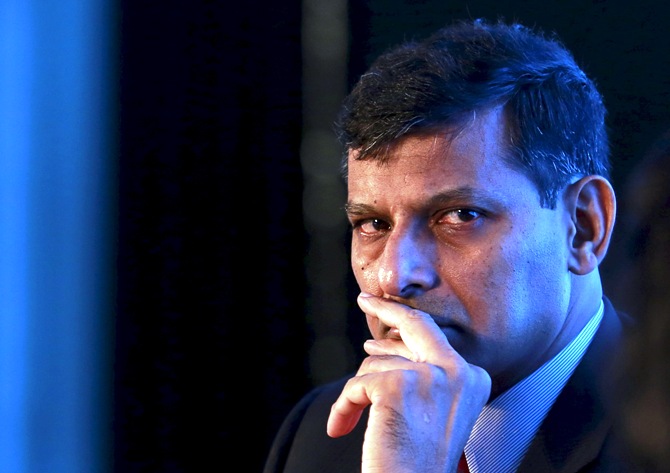
RBI Governor Raghuram Rajan said that consolidated fiscal deficit of the Centre and states rose to 7.2 per cent in 2015 from 7 per cent in the previous year.

I-T Dept cleared Rs 23,000-crore refunds in direct taxes.
The government is confident of meeting the fiscal deficit target of 5.9 per cent of gross domestic product (GDP) and the nominal GDP target of 10.5 per cent despite pressure in the initial months of FY24, Economic Affairs secretary Ajay Seth told Business Standard. Normally the initial months of any financial year see proportionally a higher fiscal deficit because the expenditure is evenly paced while revenue picks up in the later months, he said. "This year the proportional fiscal deficit so far is much closer to the target than in most other years.
For the first eight months of the current financial year, the figure stood at Rs 7.17 trillion.
The Budget estimate of fiscal deficit for the next financial year has been underestimated by nearly 0.9 percentage point of Gross Domestic Product, or about Rs 51,000 crore. This is because the estimates for revenue collections in the Interim Budget for 2009-10 do not reflect the full impact of the duty concessions announced by the government since December 2008. The Budget estimate for fiscal deficit in 2009-10 put it at 5.5 per cent of GDP.
The FDI in insurance and defence and the plethora of schemes for improving the rural economy with all round focus on development programmes, are a key thrust.

S&P Global Ratings projects India's economy to grow at 6.3 per cent even if crude oil prices average USD 130 per barrel in the current fiscal year, highlighting the nation's resilience amidst the West Asia crisis and strong commitment to fiscal consolidation.
Arvind Panagariya explains why his suggestion of the fiscal deficit at 4.5% of GDP differs from P Chidambaram's 4.1% in the interim Budget.

The government further said the gross tax revenue as a per cent of GDP is expected to increase to 12.1 per cent of GDP in 2019-20 and stabilise at that level in 2020-21 before climbing up to a level of 12.2 per cent of GDP.
This is because the bond market has factored in the Rs 4.88-trillion gross borrowing for April-September 2020.
The gross fiscal deficit of the states is expected to decline to 4.2 per cent of gross domestic product at Rs 1,16,175 crore (Rs 1,161.75 billion) in the year ended March 31, 2004

Even with the possible expenditure roll-overs and off-budget financing, the fiscal deficit target will not be met. The FRBM Act, after its amendment in 2018, allows a fiscal deficit slippage of not more than 0.5 per cent for any given year, provided there are justifications. These justifications include war, national security, severe collapse in the agriculture sector, a major natural calamity, big structural economic reforms, or the decline in real output growth of a quarter by at least 3 percentage points below its average of the previous four quarters.
India's fiscal deficit shot up over 23 per cent to Rs 3.80 lakh crore in the first eleven months of this fiscal
India's fiscal deficit has crossed the government's initial estimate of 2.5 per cent of Gross Domestic Product in the eight months up to November 2008.

The Indian government is set to accelerate reforms, including measures to enhance foreign direct investment, speed up divestment, and boost asset monetisation, to maintain economic growth despite rising fuel and fertiliser import costs driven by the West Asia crisis.

China has emerged as India's largest trading partner in 2025-26, with bilateral trade reaching USD 151.1 billion, while India's trade deficit with Beijing widened to an all-time high of USD 112.6 billion.

At a combined level, the fiscal deficit of the Centre and states together will come at 12.1 per cent, with the states contributing 4.5 per cent.
